

 May 23rd, 2021
  Eden
Eden 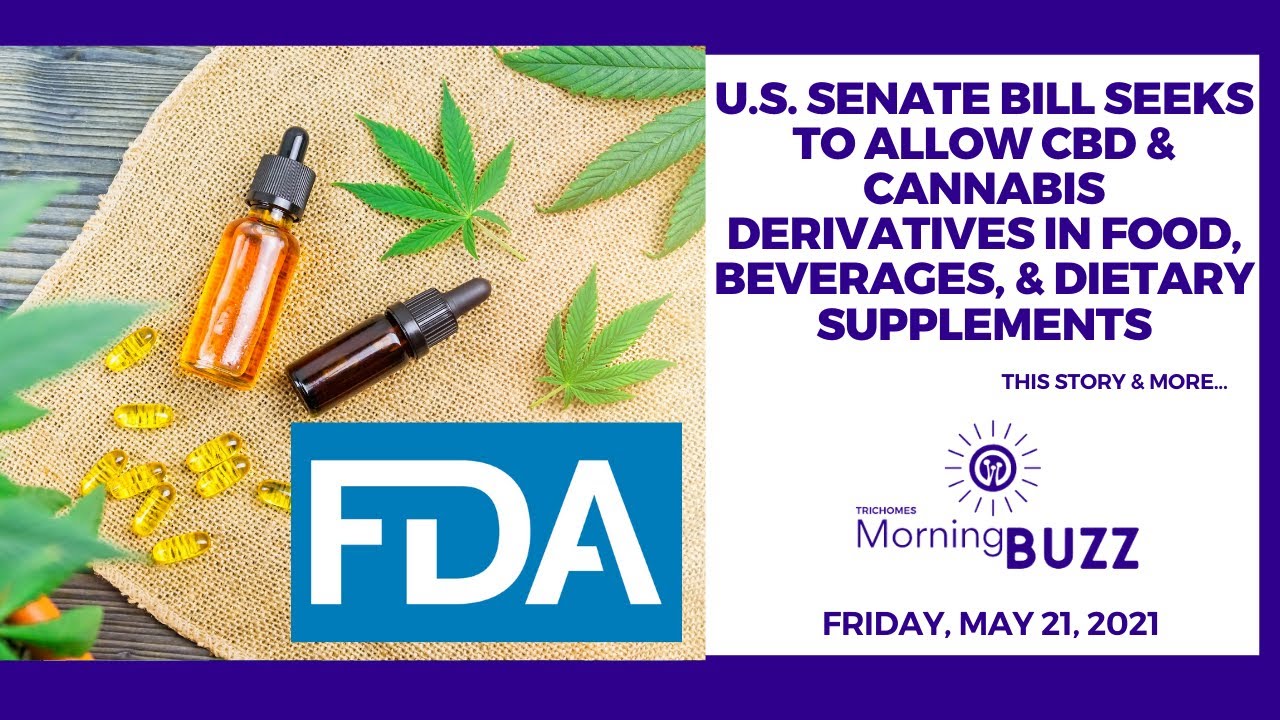
Cannabis News Update May 21, 2021
Today in cannabis news: A U.S. Senate bill seeks to allow CBD and cannabis derivatives in food, beverages and dietary supplements; New Mexico cannabis advocates call for a crop limit increase, fearing a supply shortage once the state’s legal market launches; and U.S. Senate Finance Committee Chairman Ron Wyden says that once federal legalization happens, the industry should be integrated into international commerce.
The Morning Buzz presented by TRICHOMES brings you late-breaking news that tells you what’s happening within the cannabis industry. Check in with the cannabis community at TRICHOMES.com
** First up: A new U.S. Senate bill introduced this week seeks to address the Food and Drug Administration’s slow work on finalizing a system to permit the use of cannabis derivatives like CBD in food, drinks and dietary supplements. Since the federal legalization of hemp in 2018, the FDA has since failed to begin to work on developing such a process.
Sens. Ron Wyden (D-OR), Rand Paul (R-KY), and Jeff Merkley (D-OR) have introduced the Hemp Access and Consumer Safety Act, which would exclude “hemp, hemp-derived cannabidiol, or a substance containing any other ingredient derived from hemp” from several constraints that have stymied the development of authorized consumable hemp goods as the FDA delays guidelines.
Federal authorities may additionally “establish labeling and packaging requirements” for hemp-derived items, according to the proposal.
“Every day that the FDA drags its feet to update its CBD regulations, hemp farmers are left guessing about how their products will be regulated, and real economic gains for workers and business owners in Oregon and across the country are left on the table,” said Sen. Merkley, adding that “hemp-derived CBD products are already widely available, and we all need FDA to issue clear regulations for them just like they do for other foods, drinks, and dietary supplements.”
Senate Bill Would Allow CBD-Infused Foods, Drinks And Dietary Supplements
** Next up: New Mexico cannabis advocates are calling for the increase of crop limits and implementing adjustments to medical cannabis laws, including removing certain sales taxes, as the state prepares to enact recreational cannabis legalization.
Companies in the cannabis industry are worried about an abrupt supply deficiency once the state’s industry launches because currently cannabis cultivators are limited to growing a maximum of 200 plants. Pricilla Agoncillo, president of the Cannabinoid Industry Association and chairperson of the National Cannabis Party, calls the crop limit an arbitrary number.
Permitting cannabis imports from other states, like California or Colorado, could help ease a shortage, but Agoncillo noted it would necessitate either more comprehensive legislative changes or the help of federal cannabis legalization.
All transactions made by more than 115,000 New Mexicans registered in the state’s medical cannabis program were subject to sales tax. Sales tax on medical cannabis would be removed for a 90-day, 8-ounce stock cap for individual patients within revised regulations newly detailed in a letter to licensed cannabis companies.
https://www.thecentersquare.com/new_mexico/fearing-shortage-new-mexico-cannabis-businesses-push-to-raise-plant-limit/article_5f8f1a98-b8a4-11eb-937c-43ca1a74d027.html
** Last up: U.S. Senate Finance Committee Chairman Ron Wyden (D-OR) said this week that once federal cannabis legalization takes place, it must be integrated into international commerce, with U.S. trade officials supporting domestic cannabis business interests.
Although the topic hasn’t been discussed in the legalization bill Sen. Wyden is collaborating on with Senate Majority Leader Chuck Schumer (D-NY) and Sen. Cory Booker (D-NJ), Wyden said that one out of every four jobs “revolve around international trade” and that the U.S. must be anticipating “the days when cannabis becomes part of ongoing discussions that are conducted by trade officials.”
Wyden said the foremost priority being addressed in the forthcoming federal cannabis legalization bill is to “make sure that legalizing cannabis establishes an anti-racism policy.” The second priority is “public health impacts of cannabis,” and the “third, of course, is the staggering economic impact of legal cannabis.”
Wyden said they’re particularly focused on updating Section 280E of the tax code, which forbids state-licensed cannabis companies from claiming tax deductions and credits that are accessible to other businesses.
 Posted in


